Articles
Dynamic decision support for safer speed management

In-cab guidance from Zelra’s DAS improves drivers’ situational awareness, reduces surprises, and supports safer, smoother journeys.
Encountering an unexpected or poorly communicated speed restriction can contribute significantly to train overspeeding. The consequences on complex rail networks are serious. Ineffective speed management is a recognised risk factor associated with safety events including SPADs, missed signals, station overruns, and derailments.
Together, these events illustrate how lapses in speed management can quickly compound operational risk. In this high responsibility environment, rail software provider Zelra’s Driving Advice System (DAS) is a decision support tool helping drivers complete their journeys safely and on time.
We spoke with Michael Zink, Zelra’s Managing Director, to find out more about this established technology which is used by rail operators in Europe and the ANZ region.
Anticipatory guidance
“Our DAS solution enhances drivers’ situational awareness by sharing information about upcoming and current speed restrictions at the right time during each journey,” Zink said.
“The technology enables smoother, more controlled driving by providing real-time speed guidance directly to drivers. This is achieved by generating and continuously adjusting an optimal journey profile for each route.”
Zelra’s in-cab DAS screen or tablet informs the driver about upcoming temporary and permanent restrictions in advance, including the distance-to-onset and the exact extent of each restriction. The system calculates the optimal speed for approaching a restriction and provides a clear recovery point back to the regular line speed. This helps drivers to pace consistently, reducing the stress of reacting late.
Train-specific parameters such as expected braking performance and estimated train mass can be configured to refine the guidance, further improving speed management consistency across fleets and conditions.
Station stopping support provides distance-to-stop information, speed reduction guidance for the approach, and cues to help keep dwell times on plan. The result is a reduction in station overruns and late departures. Approaches to diverging junctions are managed with predicted braking curves and target speeds that adapt to the train’s position.
Zink said the physics-based DAS algorithm generates each journey profile by considering track geometry and speed limits, as well as the timetable, train characteristics, real-time train position, and speed.
“These all help to create an accurate picture,” he continued. “Following the DAS guidance improves speed management and consistency by reducing unnecessary braking and acceleration.
“This gives drivers greater confidence about approaching speed restrictions, signals, and stations at the right time. Red signals and conflicts are encountered less frequently, which in turn reduces instances of hard braking at a signal or speeding up to chase the timetable.”
Human factors
Zink explained that Zelra’s DAS is a driver aid, so the information on the DAS screen or tablet is designed to be easily read at a glance.
“A clear hierarchy separates the current target, the next change, and contextual information on distance and time,” he said. “Layouts remain stable to create familiarity, and the information is numeric, with day and night visibility profiles. Non-essential text or decorative elements are avoided to reduce scan time.”
The system is designed to prevent alert storms, where multiple updates might be triggered in quick succession during rapidly changing conditions, as these create distraction rather than clarity. When approaching a critical point, such as a station, changes to the on-screen information are limited so drivers remain focused on their workload.
Audio alerts are an optional feature that can be enabled or muted, according to the operator’s specification. These use thresholds to ensure the driver only receives prompts that are clear and timely.
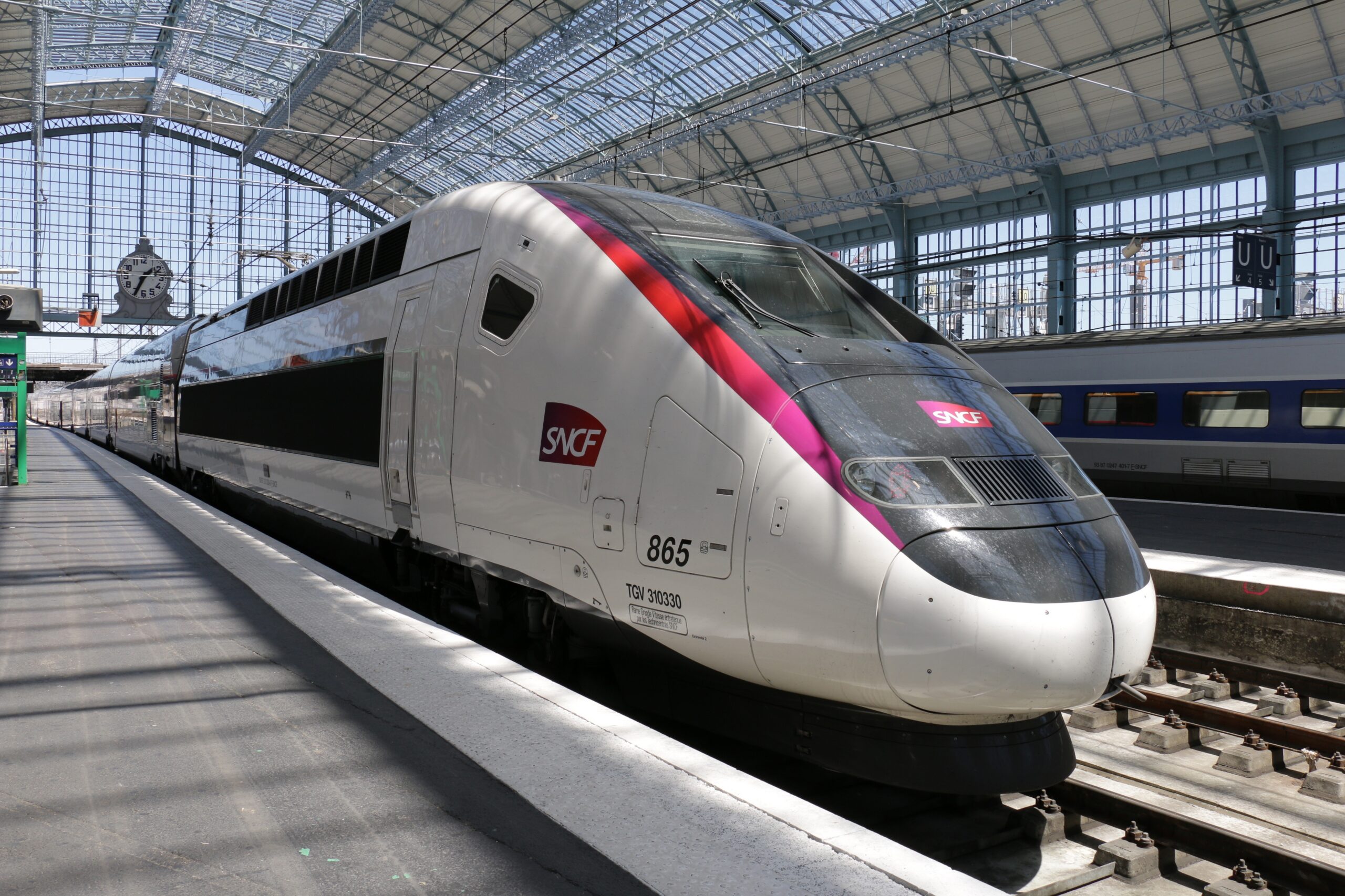
Zink emphasised that DAS exists to enhance driver expertise, not replace it. “We know drivers bring vital route knowledge, train handling skills, and intuition to the table,” he said. “Our technology contributes precise data and optimisation algorithms. Together, this is a powerful combination.”
He added that Zelra’s DAS offers value to drivers by enabling them to make decisions that are based on more accurate information.
“For example, the DAS advice might be to coast because there is a generous timetable allowance before the next station, or it might suggest a specific speed because of an approaching restriction,” he explained.
“Armed with this knowledge, a driver can act proactively rather than reactively. It means a safer shift with fewer surprises, a helping hand to keep on time, and the assurance of contributing to a more efficient railway without sacrificing control.
“DAS offers a safety net that helps to prevent potential issues before they happen, allowing drivers to complete their journeys confidently and safely.”
Live re-routing
Speed management is rarely a static task, Zink said. “Temporary speed restrictions, junction speeds, and approaches to signals or stations can combine to create short windows where the driver must interpret, prioritise, and act decisively.
“Even experienced drivers are put under pressure when information is delayed or when it changes unexpectedly after the journey is already underway.”
He said this is when decision support and anticipatory guidance can reduce surprises and support safer, more controlled driving outcomes. “Human-centred decision support for drivers is just one of the ways that Zelra’s DAS can enhance network-wide safety and efficiency.
“The Connected version of our DAS, known as C-DAS, can play a vital role in communicating re-routing information within the cab, connecting drivers to live operational data from the wider rail network.”
C-DAS aligns with digital infrastructure such as European Train Control System (ETCS) and will also be able to integrate with existing digital signalling systems. When re-routing is required, the journey information displayed on the DAS screen will be instantly updated without requiring driver intervention.
“The driver simply follows this revised guidance to complete the journey,” Zink added.
The entire network could potentially be managed in this way. Conditions, conflicts, or adjustments would be applied to every train, enabling synchronised network management for greater operational efficiency.
Zink explained that the technology is well advanced and offers additional benefits including passenger experience, energy savings, and decarbonisation.
“Interoperability is a core design principle for Zelra, and we have already engaged in extensive C-DAS trials along live routes in the United Kingdom. Our DAS solutions are built to integrate with a broad range of external systems and data sources, including traffic management platforms and third-party operational tools.”
Zelra has evolved its DAS capability in live rail environments. This work has included operators such as Greater Anglia, Great Western Railway, and ScotRail in the United Kingdom, as well as large-scale deployments in France for SNCF and in New Zealand for KiwiRail.
“Across these markets, Zelra has delivered DAS in partnership with original equipment manufacturers and operators, supporting both tablet-based and integrated deployments. Crucially, our experienced team has enabled configuration, testing, and operational rollouts without disrupting our customers’ live operations.”
Want to learn more about Zelra’s DAS? Get started here or contact our team to start the conversation.
ARTICLE
Category
Articles
Mode of Transport
Freight Rail, Passenger Rail
Solutions
Driving Advice System (DAS)
Region
Australia/New Zealand, European Union, United Kingdom
Read time
6 minutes